Source Electric Chain Window Openers for Industrial, Marine, and Skylight Use
Find and compare 30 electric chain window opener models from Shanghai suppliers. Evaluate options featuring 24V DC motors, brushless structures, and various stroke lengths for industrial, marine, and skylight applications. Review specifications for push force, control types, and sensor integrations to select the right automated solution.
Key considerations
Products List


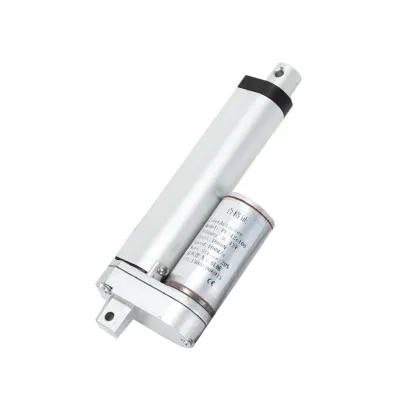


Comprehensive Sourcing Guide
Electric Chain Window Opener Sourcing Guide
Buyers evaluating electric chain window openers must first distinguish between general automatic door operators and specialized window actuators, as the product data reveals a mix of applications ranging from industrial machinery to specific casement and sliding window systems. The observed listings indicate that while some units are designed for universal use in cars and power tools, others are explicitly engineered for skylights, sunrooms, and tilt-and-turn windows, requiring precise matching of the actuator type to the intended architectural application.
Procurement teams should verify whether the specific model supports the required stroke length, as the available data shows travel ranges extending from 300mm to 800mm, with some units limited to shorter 300mm to 500mm ranges. Selecting the correct stroke is critical for ensuring the chain mechanism can fully open or close the window without mechanical binding, and buyers must confirm that the selected model's physical dimensions align with the window frame constraints before finalizing any order.
Product Scope and Observed Listing Signals
The market for electric chain window openers presents a diverse range of configurations, including brushless motors and electromechanical driving types that operate on either DC 24V or AC 220V power supplies. Buyers must carefully review the voltage specifications of each listing, as the presence of both 24V and 220V options suggests that some units are designed for low-voltage safety applications while others may require standard mains power integration, directly impacting the electrical infrastructure needed for installation.
Packaging and customization options vary significantly across the observed listings, with some products shipped in plastic film and compreg cases while others utilize standard export cartons or Canton packaging. Since customization is available for many of these units, buyers should explicitly request details on whether the casing protection is a closed type suitable for their specific environment and confirm if optional sensors like rain or smoke detectors can be integrated into the controller system to enhance operational safety.
Technical Specifications to Verify
When assessing the mechanical performance of these actuators, the maximum push force is a critical metric, with observed values ranging from 400N to 600N depending on the specific model and application. Buyers must calculate the required force based on the weight and friction of their specific window sash to ensure the selected actuator can overcome resistance without stalling, noting that models with lower force ratings may be insufficient for larger or heavier industrial windows.
The electrical characteristics, including working current and excitation modes, require close scrutiny to ensure compatibility with existing control systems. While some units operate at 1A or 1.5A with DC radio receivers, others may utilize different excitation modes or pole configurations that affect operating speed and torque. Procurement teams should verify that the controller, whether it is a simple switch or a complex radio receiver with sensor inputs, matches the desired level of automation and remote control functionality for the project.
Compliance and Safety Documentation
Certification requirements for electric window openers vary by region and application, with observed listings citing standards such as CCC, ISO, CE, and UL, alongside specific product standards like EN 12101-2 for fire safety in some contexts. Buyers must confirm that the supplier can provide valid, up-to-date certification documents for the specific model being purchased, as the presence of a certification mark on a listing does not guarantee that every unit in a batch meets the same rigorous safety and performance criteria.
Safety documentation should also address the electrical protection and structural integrity of the device, particularly regarding the casing protection and the brushless motor structure. Since the product data indicates a closed type casing and various voltage inputs, buyers should request detailed safety manuals that explain how the unit handles electrical faults, thermal overload, and mechanical jams to ensure compliance with local building codes and insurance requirements for the installation site.
Cost Drivers and Commercial Terms
The price range for electric chain window openers is broad, spanning from approximately 3.2 USD to 120 USD, reflecting differences in motor technology, stroke length, and included accessories like remote controls or sensors. Buyers should understand that the lower end of this range likely corresponds to basic models with shorter strokes and minimal features, while higher-priced units typically offer advanced control systems, longer travel ranges, and enhanced durability suitable for demanding industrial or marine applications.
Minimum Order Quantities (MOQ) and lead times are significant commercial variables, with observed MOQs ranging from a single unit to 500 units, allowing for both small-scale pilot projects and large-volume deployments. Procurement teams must negotiate clear terms regarding production lead times and shipping logistics, especially since the products originate from Shanghai and other locations in China, ensuring that the supply chain can accommodate the specific delivery schedule required for the construction or renovation timeline.
Supplier Qualification and Quality Control
Supplier qualification should focus on the ability to provide consistent product standards, as the data indicates that some units are manufactured to client requests while others adhere to standard specifications like CE or UL. Buyers must verify the supplier's quality control processes to ensure that the "Standard or Nonstandard" designation is accurately applied and that the hollow chain structure and electromechanical components meet the promised performance levels across all units in the order.
Quality control checks should also include verification of the product origin and the consistency of the packing materials, which range from plastic film to export cartons. Since the application scope includes diverse sectors from agricultural machinery to garment machinery, buyers should request sample testing to confirm that the actuator performs reliably under the specific environmental conditions of the intended use, such as heat resistance or exposure to moisture, before committing to a large-scale purchase.
Long-Term Procurement Checks
Long-term procurement success depends on establishing a reliable supply chain for replacement parts and ongoing technical support, particularly for the specialized components like the DC radio receiver and transmitter. Buyers should confirm that the supplier maintains inventory for critical spare parts and can provide firmware updates or troubleshooting assistance for the controller systems, ensuring that the installed window openers remain operational throughout their intended service life.
Regular performance audits are essential to monitor the longevity of the brushless motors and the integrity of the chain mechanisms over time. Procurement teams should implement a schedule for periodic inspections to check for wear on the hollow chain and to verify that the push force remains within the specified 400N to 600N range, addressing any degradation early to prevent costly failures or safety hazards in the field.
FAQs
How much push force do these electric chain window openers provide?
The listed electric chain window openers provide 400N push/pull force on the TM-CWO300 and CWO-300 models, while another listed automatic door operator variant specifies a maximum push force of 600N. Choose the force rating based on window size, weight, and friction. Heavier casement or skylight sashes generally require the higher-force option to open and close reliably.
What stroke lengths are available for the electric chain window opener?
Available stroke lengths include 300mm, 400mm, 500mm, 600mm, and 800mm across the listed models, with some variants limited to 300mm through 600mm. The stroke determines how far the window sash travels when opening. Measure the required sash opening distance before ordering, since selecting a longer stroke than needed can complicate installation and linkage setup.
What voltage options do the chain window actuators support?
The listed chain window actuators operate on DC24V input voltage, with working currents around 1A to 1.5A depending on the model. The broader product line also lists 24V and 220V voltage options. Low-voltage DC units are common for motorized windows, skylights, and sunrooms because they simplify wiring and pair easily with radio receiver and transmitter controllers.
Which window types are compatible with these electric chain openers?
The listed openers are used for casement windows, sliding windows, and tilt-and-turn windows, as well as motorized windows, skylights, and sunrooms. Electromechanical DC drive units mount along the sash and push or pull via the hollow chain structure. Confirm your sash geometry and mounting space before ordering, and note that customization is available for non-standard installations.
Can the window opener work with sensors or remote control?
Yes. The listed products pair a DC radio receiver and transmitter as the controller, and one configuration adds a sensor to the controller set. Optional accessories include a rain sensor and a smoke alarm sensor, enabling automatic closing during rain or ventilation management. Select the controller configuration that matches your automation needs when requesting a quotation.
What certifications and standards do these window openers meet?
Certification and standard information varies by listing. The TMWO model lists CCC and ISO certification, one product line lists CE and UL standards, and another entry states production to clients' requested standards. Because requirements differ by destination market and project specification, confirm the exact certification documents for the specific model and shipment before placing an order.
What is the minimum order quantity and price range?
The listed products show a price range from about 3.2 to 120 USD per unit and minimum order quantities ranging from 1 to 500 pieces depending on the model and seller. Low-MOQ listings suit sampling and testing, while higher volumes typically improve unit pricing. Request quotations for your specific stroke length, force rating, and controller configuration to get accurate figures.
How are the openers packed and where are they shipped from?
Packing options across the listings include plastic film with a compreg case, export cartons, and standard cartons, chosen according to the model and transport requirements. The listed origin is Shanghai, China. Packaging matters for sea freight protection of chain actuators, so specify export-grade packing when ordering, and confirm the exact origin and shipping terms for your chosen model.